choosing What to delete: PART 2
In the digital world, space is pretty cheap these days. I can backup my laptop for 6 months for what it costs to spend an evening out. I don’t care about Google’s storage issues so I don’t even bother to delete emails I’m not interested in; I just ignore them. But I do notice that when I take the time to actually select a file and trash it, it feels good. In fact, it feels increasingly good because it happens less and less often. Rarity amplifies value. Tossing something gives us a chance to diss it. Stupid old thing—who needs it? I’m not the kind of person who wants to even be associated with a fake wood, wild-west gun rack anymore! Severing the ties that bind us to things helps us build our identities, and we love that. Human beings love to clarify, confirm (wax and polish) our identities. Whole civilizations do that too, to build a sense of who they are. Looking at our civilization now, I think about how satisfying it must have been for those in the 18th and 19th centuries to throw big things away. We’ll keep the sextant and drop the astrolabe overboard. We’re lovin’ the stethoscope but hating the leaches! Besides, they smell! Out they go! Kings and popes? Can’t recycle ’em. They’re gone! They envisioned an entire culture as fresh and clean as a new refrigerator. Out with the old, in with the new.
Unfortunately, sometimes we don’t notice that there is a baby in the bathwater. To make a clean break with the past, perhaps we went too far. So what? Who wants a partial makeover? In our zest to believe that liberty, freedom, commerce, new knowledge (mostly scientific) and new technologies were all we would need solve the problems our species faces, we may have deleted some essential things—some fundamental practices humans need to make our lives work. I’m talking about things we’d been doing since the beginning of our known history. Maybe one reason they got deleted is that they were working so well we didn’t even notice them—or took them for granted. Maybe we needed to see what it would be like to live without them.
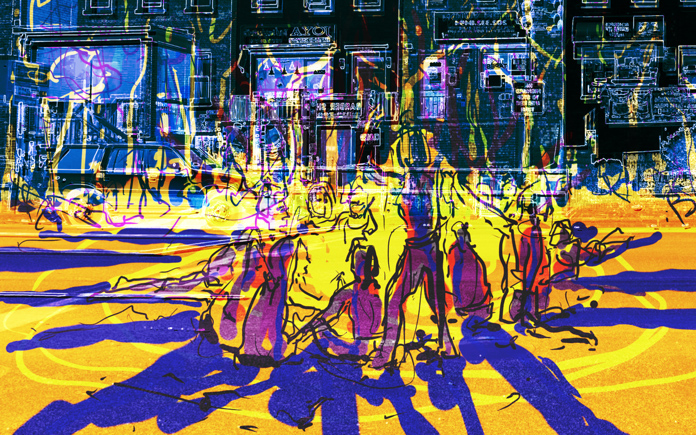
Now we know. We know what happens when we throw out coming together each day around a table with the people we love and sharing our days. We know what it’s like to live in neighborhoods where we don’t know our neighbors. We understand the challenges of living among people with entirely different and incompatible worldviews who never talk with one another. When we threw them away, we didn’t realize the value of the rituals that allow us to build the invisible bonds between us: the ones that begin with telling each other our stories around food and fire while our shadows dance on the trees and children listen, wide-eyed.